 By Phyllis Domingo, REALTOR® · San Antonio Relocation Specialist · 6 min read
Opened on May 3, 1914, the San Antonio Zoo spans about 57 acres in Brackenridge Park with roughly 750 species and more than 3,500 animals, and it still draws more than a million visitors a year. Here is what makes it worth a family day out, and how to plan one honestly.
The headline numbers
The San Antonio Zoo opened on May 3, 1914, which makes it one of the oldest zoos in the United States, and it has been a family anchor in this city ever since. It now covers about 57 acres in Brackenridge Park and is home to roughly 750 species and more than 3,500 animals, with more than a million visitors a year.
The zoo's own materials cite 700-plus species, and encyclopedia and news coverage commonly round that to about 750. Either way, the animal collection is among the largest in the country, and the bird collection is famous as one of the biggest in the world.
A century of firsts
The zoo's roots go back even further than 1914: animal exhibits appeared in San Pedro Park in the mid-1800s, a deer preserve at Brackenridge Park followed around 1902, and the modern zoo began in 1914 when Colonel George W. Brackenridge donated buffalo, elk, deer, monkeys, lions, and four bears.
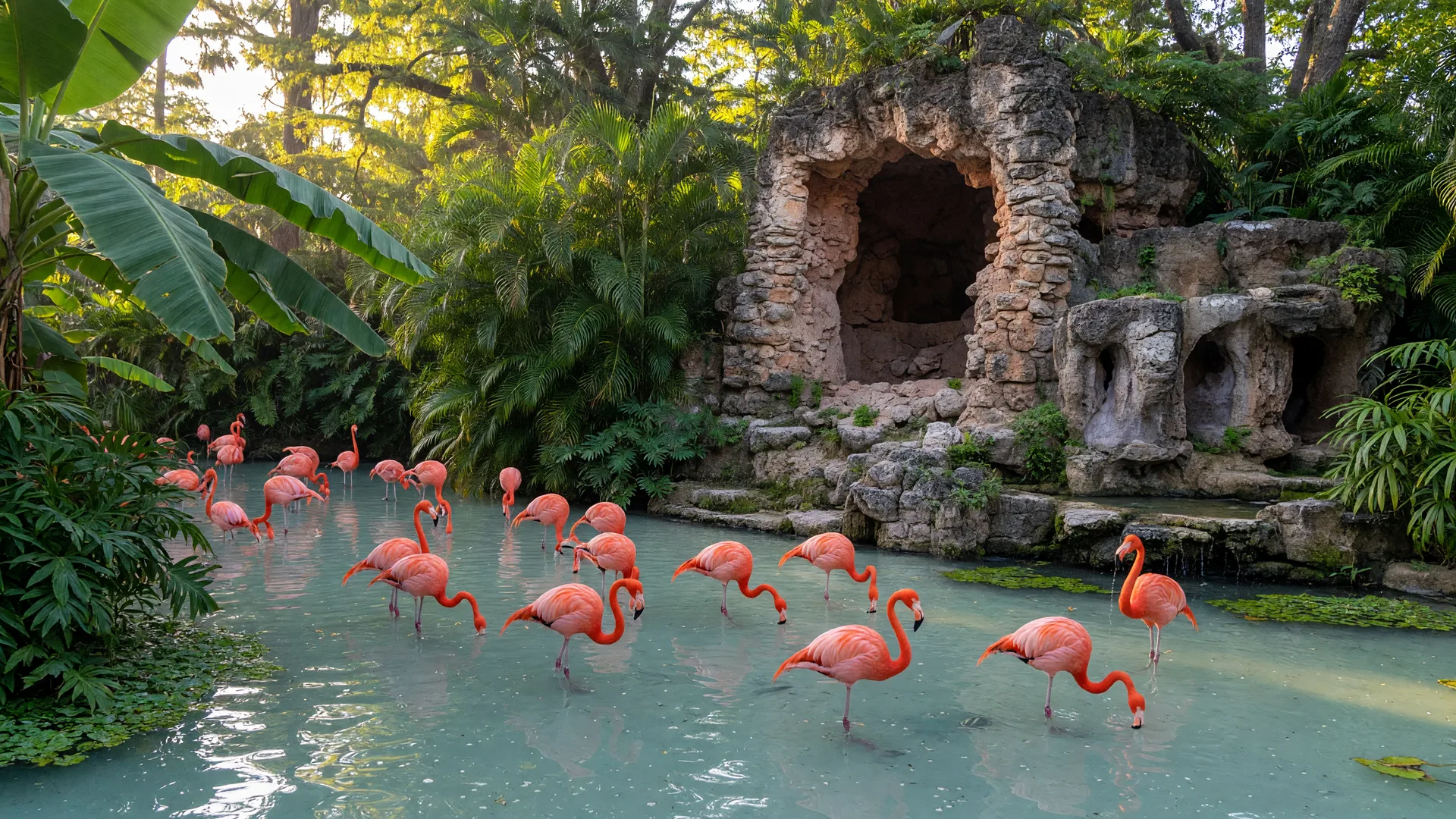
It was an early pioneer of cage-free exhibits, opening barless bear terraces and a primate paradise in 1929, and along the way it bred the first Caribbean flamingo colony in captivity and worked with breeding pairs of endangered whooping cranes.
Why families keep coming back
The zoo sits inside Brackenridge Park, a large city park that has long shared the weekend with the neighboring San Antonio Botanical Garden and the Japanese Tea Garden, so a morning with the animals naturally stretches into an afternoon outdoors.
For grandparents in town, school groups, and families with kids of very different ages, the mix of close-up animals, wide paved paths, and plenty of places to stop is what keeps it the default answer to the Saturday question.
- AZA-accredited and run as a nonprofit by the San Antonio Zoological Society.
- A pioneer of cage-free exhibit design since 1929.
- One of the world's largest bird collections, including the first Caribbean flamingo colony bred in captivity.
- More than a million visitors a year, which says more about its place in local life than any number of species.
Planning notes that are actually honest
Plan around Texas weather: mornings are cooler and the animals are more active, and most of the zoo is flat and stroller-friendly. Bring water and hats in summer, and check the zoo's own site for current hours, tickets, and exhibit notes before you go.
If your kids have a specific animal in mind, the zoo's animal maps are worth a quick look before you set out, because a place this big deserves a loose plan.
The zoo as a neighborhood question
For newcomers, the zoo doubles as a useful compass when you are choosing where to live: families in central and north-central San Antonio treat Brackenridge Park as a weekend default, with the zoo, the Botanical Garden, and the surrounding park in easy reach.
When you tour with me, ask about drive time to Brackenridge Park if weekend outings are part of your plan. For many families that single drive time matters more than any amenity on a floor plan.
Plan your own visit
The numbers are the easy part; the visit is better lived than described. Pick a weekday or Sunday morning, buy tickets on the zoo's site, and give yourselves three unhurried hours in the park.
If you are moving with kids and want neighborhood advice that includes the zoo, the school pickup line, and the Botanical Garden in the same conversation, call or text me at 210-744-5478, or use the contact page. Free, honest, and no pressure.
Watch Phyllis on this topic
Sources
The numbers in this post were checked against these sources on October 8, 2026.